Liz Cummins
CPDT-KA, CCBC-KA, FFCP, PST-CI
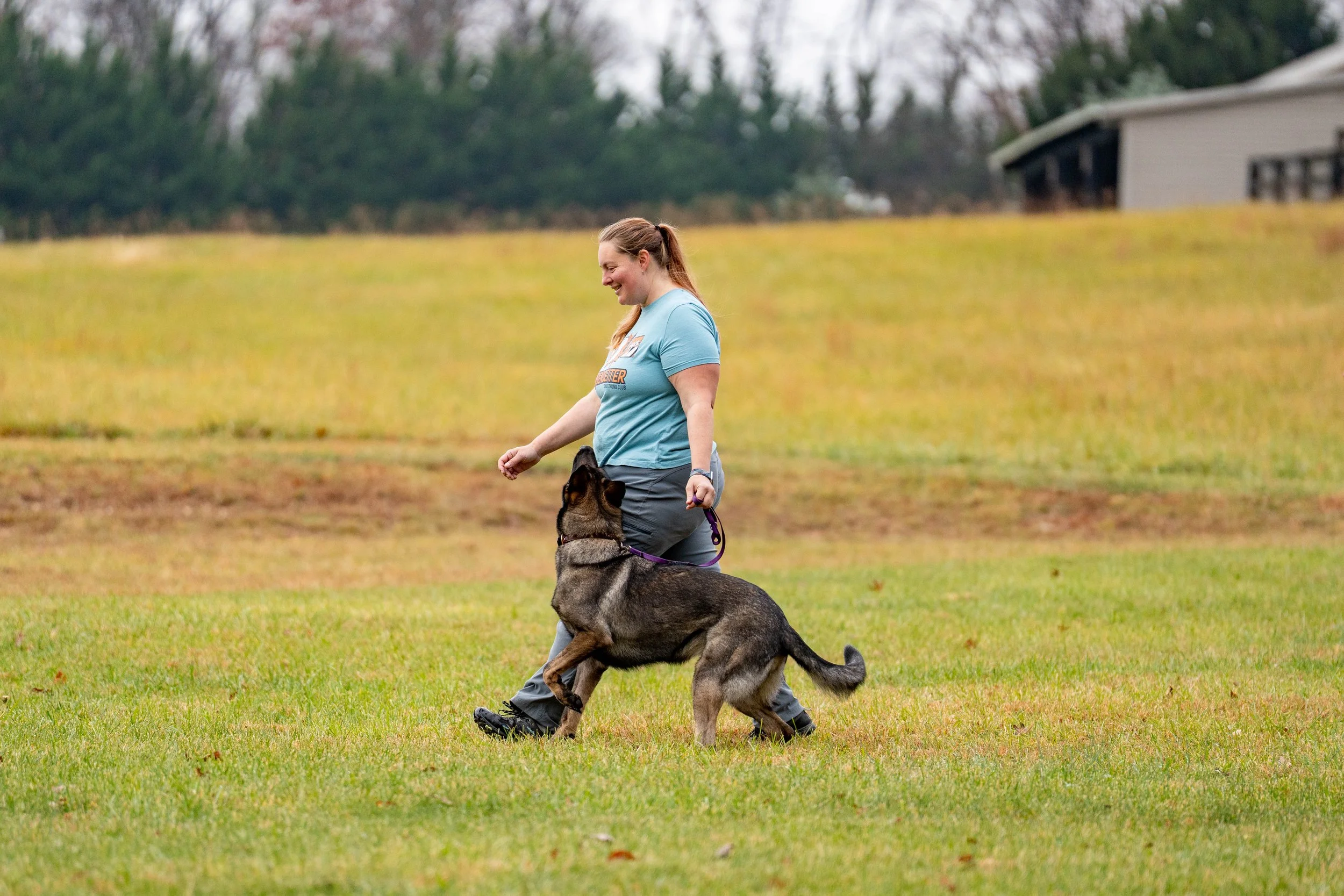
In addition to my (canine, feline, and reptilian) household teachers, I’ve been lucky to learn from incredible people in the dog training world.
My first real glimpse of what dog training would become for me came in a group manners class. I was struggling with my reactive adolescent pit bull, surrounded by calm, confident dogs and their people. The assistant trainer came up to me and said:
“It’s not because you or your dog is bad. You just have a harder job than anyone else in the room.”
That moment changed everything. The relief of being seen — without judgment — is something I’ve carried with me ever since. It has shaped how I work, and it remains my goal to offer my clients that same sense of clarity and compassion. (thank you eternally, Blueberry Dogs)
Since then, I’ve worked across group classes, shelters, veterinary settings, private training, day training, boarding, and board & train programs. Over time, I’ve learned that my favorite work — and my best work — happens with:
Puppies and adolescents
Dogs with behavioral challenges
Families and kids
That’s where my services are most intentionally focused today.
Education & Credentials
Predation Substitute Training - Certified Instructor (PST-CI)
Certification of Completion: Aggression in Dogs Master Course
Fear Free Pets - Fear Free Certified Professional (FFCP)


Like Magic Dog Training
Like Magic Dog Training was founded in 2019, after Liz shifted careers to focus on training full-time.
Over the years, Like Magic has taken many forms — online classes, in-person classes, day training, board & train, virtual coaching, and private support. What has never changed is the commitment to kind, clear, and fair training that prioritizes communication, emotional safety, and the relationship between dog and human.
Training at Like Magic:
Does not use prong, choke, or e-collars
Does not rely on intimidation, pain, or coercion
Does emphasize management, enrichment, and reinforcement
Focuses on building environments where good choices are easy — and reinforced
Every client receives a personalized approach designed to create sustainable behavior change and a better quality of life for both ends of the leash.
-
Labels can be helpful — and they can also be limiting.
I am a positive reinforcement–based trainer, which means I believe positive reinforcement is the most effective way to influence behavior while protecting the relationship we have with our animals. I do not use aversive tools or corrections.
For me, the most important questions in any training plan are:
1. What happens when my dog does something right?
Your dog is set up to succeed and rewarded for making good choices. Rewards might include food, toys, movement, access to something they enjoy, or social interaction.
2. What happens when my dog does something wrong?
In the moment, we step in as guardians — removing the dog from a situation they aren’t ready to handle. In the bigger picture, “mistakes” mean we’ve asked for something beyond the dog’s current skill level. That’s information, not failure.
3. Is there a less invasive way to solve this?
Often, yes. I’m committed to ongoing education and to using the least invasive, most effective approach for each dog and family. What’s sustainable varies — not just between dogs, but between humans, too.
-
Training methods reflect what a program values.
When choosing a trainer, consider how they answer the three questions above — and whether those answers align with the relationship you want with your dog.
There are excellent trainers across many methodologies. You should always feel comfortable:
Asking why something is recommended
Expressing what will or won’t work for your family
Advocating for your dog’s emotional wellbeing
Good training should feel collaborative, not coercive.
-
CBCC-KA — Certified Behavior Consultant Canine (CCPDT)
The CBCC-KA credential represents advanced specialization in canine behavior consultation. To earn this certification, I demonstrated extensive hands-on experience working with complex behavior cases, including fear, anxiety, aggression, and reactivity, and passed a rigorous examination covering:
Learning theory and behavior modification
Assessment of aggressive and fearful behavior
Case management and client coaching
Ethics, safety, and welfare-centered decision-making
Behavior consultants differ from general trainers in that our work goes beyond teaching skills. Much of behavior work focuses on:
Understanding why behavior is happening
Modifying emotional responses, not just outward actions
Adjusting environments and expectations
Supporting the human side of behavior change
This certification reflects my commitment to working thoughtfully and safely with dogs whose challenges are rooted in stress, fear, or unmet needs — and to guiding families through those challenges with clarity and care.
CPDT-KA - Certified Professional Dog Trainer (CCPDT)
CPDT-KA certification means I’ve:
Completed extensive hands-on teaching and coaching hours
Passed a comprehensive written exam on learning theory, behavior, and training
Committed to ongoing, vetted continuing education
Agreed to pursue the least invasive, minimally aversive approach available
Fear Free Certified Professional (FFCP) certification reflects training in reducing fear, anxiety, and stress during training, handling, and care.
In addition, I’ve completed advanced coursework in dog aggression and family-dog dynamics.
Continuing Education Goals
Over the next year, I plan to:
Progressing my own training knowledge with mentorship from Sarah Stremming of The Cognitive Canine
Complete Treat & Retreat certification with Suzanne Clothier
Complete my Predation Substitute Training certification with Simone Mueller
Continue expanding my work with anxious, fearful, and reactive dogs
-
No, and I believe it would be unethical to do so.
Dogs are individuals. Behavior is shaped by genetics, emotions, physical health, environment, and learning history. These factors can not be fully controlled.
What I do guarantee:
Thoughtful, evidence-based skill building
Clear communication and honest feedback
A training plan rooted in your real life
Ongoing support as you and your dog grow together
Training is a process, not a finish line - and success looks different for every family.
-
The first and most important step is listening.
A Guidance Call allows us to:
Understand your dog’s behavior in context
Identify immediate management changes
Build a plan that fits your household
Position you as the most relevant part of your dog’s learning process
Starting virtually also reduces pressure on your dog. Instead of learning that “training = exciting stranger with meatballs,” your dog learns that training happens with you.
After the session, you’ll receive:
A personalized training webpage
A clear plan for the coming weeks
Ongoing updates based on your videos and feedback
From there, we can decide together how to continue.
-
Online learning offers flexibility, clarity, and consistency.
Self-led and virtual formats allow you to:
Train when your dog is ready
Revisit material as needed
Avoid unnecessary distractions
Learn at your own pace
I use online learning extensively with my own dogs and for my own continuing education — and when used intentionally, it can be incredibly effective.
“Our dog, Radar, has issues with anxiety and reactivity. Liz worked with him and gave us strategies for training and real life situations. Radar has gotten much better at greeting visitors and is gradually less reactive on his walks.”
Radar’s Mom


“What sets Liz apart is her ability to not only train our dogs but also provide excellent feedback and practical tips for me as their owner. This comprehensive approach ensures the training sticks long after the sessions end."
-Andre and Pepper’s Mom
“We have worked with Liz at Like Magic Dog Training for several years. Her instruction and feedback have been invaluable for helping us navigate lots of issues--from reactivity to major life changes. Liz is a knowledgeable, patient, and kind instructor. She takes the time to get to know her clients and their people and design a training program to meet individual challenges.”
Fitz’s Mom
