Your Custom Text Here

Blue
The Adventure Begins: 10/16/2024
What is the Humane Hierarchy?
Addressing behavior from a professional lens means approaching change from a systematic and humane process. While you can read a little about my training philosophy on my Frequently Asked Questions and in this blog post, generally speaking when looking at behavior change I will recommend you review the Human Hierarchy of needs for your dog.
This structure emphasizes physical and mental welfare, and changing behavior by setting up successful interactions with positive reinforcement driving preferred behaviors. I am always cautious before including any behavior in a training plan that may exacerbate frustration or distress for your dog, and will work to avoid creating fallout and mistrust in your training program.
Coaching Resources
The more you utilize your coaching line and share questions and observations about your dog, the better I am able to structure sessions to meet your needs!
Guild Hall is a client portal within my website - you’ll find classes and events available only to past and present clients there, as well as discounts on certain future services. You’ll also find recommended outlets for your dog, including sports, events, and sniffspot information.
“Your Canine Community” is my client Facebook group - a spot where you can find folks also working on similar challenges with their dogs, ask questions and share resources.
Your google drive is available to you to reference your contract and contact and care form, make updates to your dog’s care information, upload vaccination records, as well as share videos and photos with questions or for feedback!
Character Sheet
10/16/2024
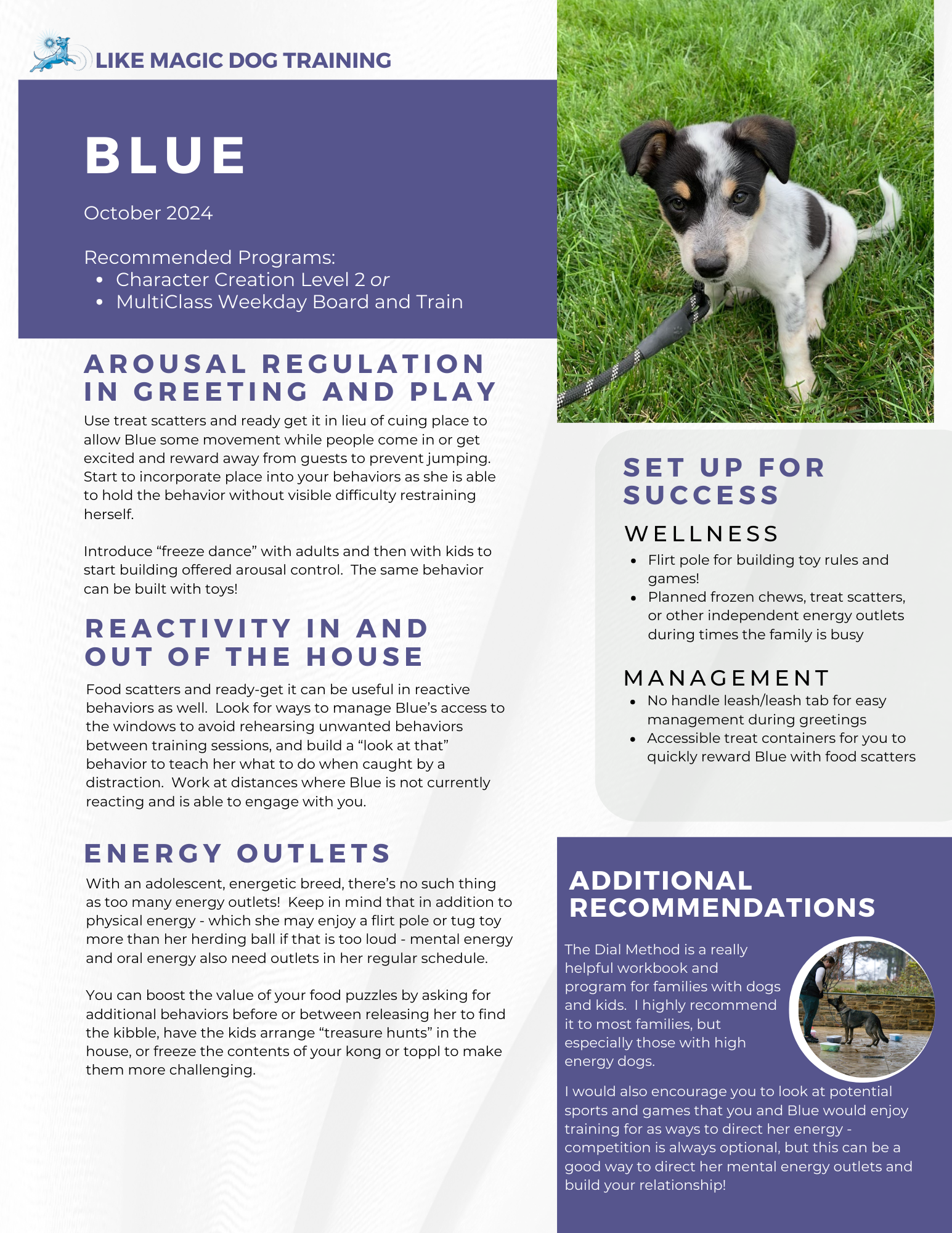
It was great speaking to you and meeting Blue last week! I’d be thrilled to help build some arousal regulation with Blue and address some of the early signs of reactivity you are seeing in and out of the house. As a quick review, I would focus on building in ways for Blue to move but maintain a lower arousal state during greetings and when things are exciting with the kids, as well as when out and about on walks at a distance she can manage. You can start building Look at That behaviors with benign distractions as well so that can become a skill in your toolbox when she’s out on walks as well!

In terms of next steps, you both expressed that you prefer to stay involved in learning throughout the process, and that a package that would allow for this would be the most useful for you. We have a good number of behaviors to address, so I would recommend either a Character Creation Level 2 ($1240) or a MultiClass ($3500) program for Blue. Both of these programs are structured to keep owners involved as behaviors develop. Obviously outside of cost differential, the primary factor that I would be looking at is reasonably the amount of time you have available to work the “homework” between private training sessions - factoring in colder weather, less daylight, and upcoming holidays. Character Creation is going to by its nature have more of the behavior building work done by you, where MultiClass focuses more on practice on the weekends after Blue has worked the behaviors over the course of the week. Let me know what you’re thinking and if either of these programs would fit well!
11/19/2024
12/15/2024 and 12/30/2024
Blue has done super well during his handoff sessions!
Outside:
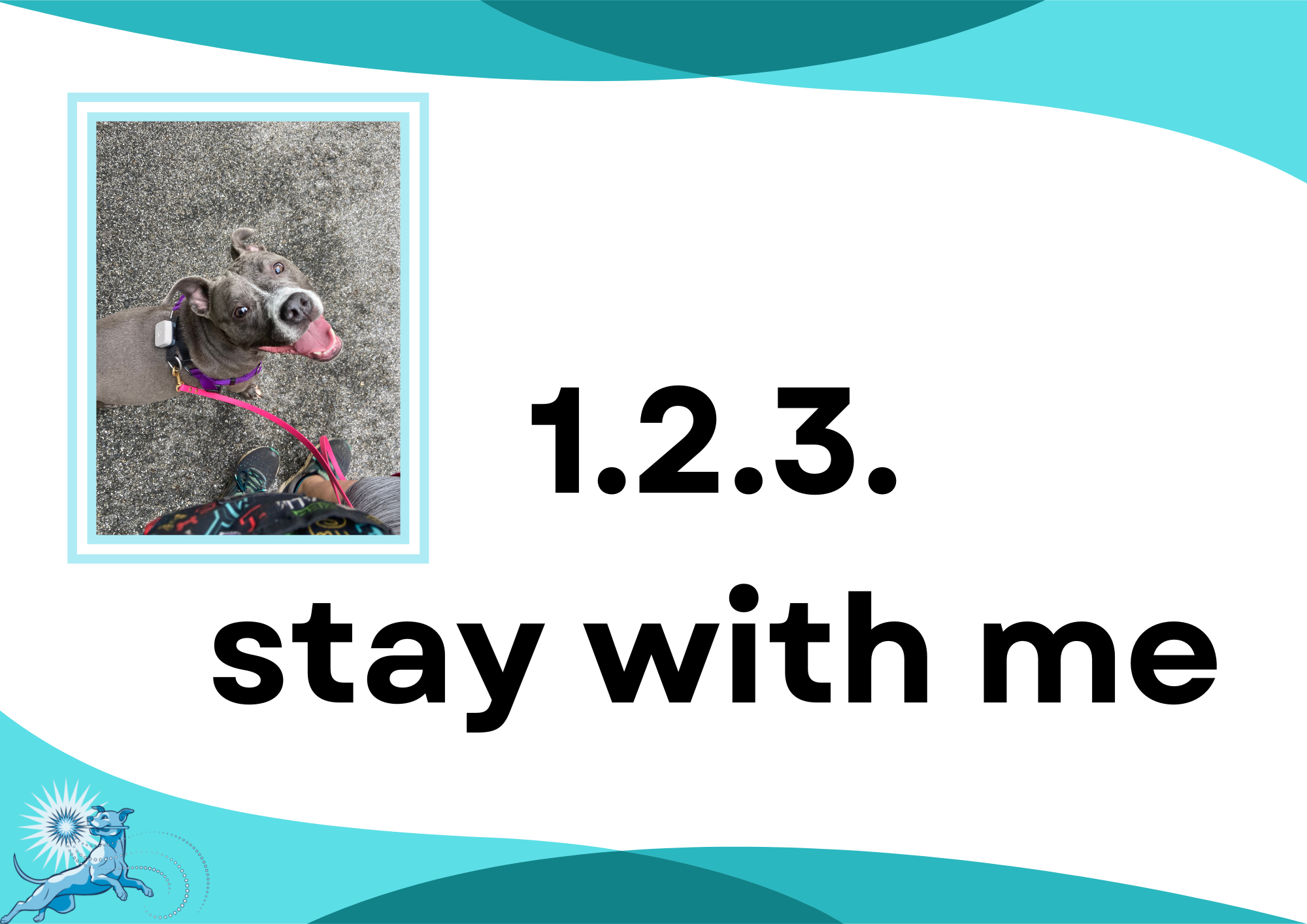
Begin walks with a lot of rewards for offered attention and more “management” to help him get his head on straight as you start your walk. As he settles in, you can slow down the treats (and as he progresses, start this “slow down” earlier). However, when a potential trigger arises, be quick to manage and set him up for success. When a trigger is approaching, start with a treat scatter and move towards ready get it and then look at that as the trigger appears and then retreats. Use Look At That (the toughest exercise of the three) most as the trigger departs.
As this is easier for him, you can end your scatter more quickly until you can fully eliminate it, but that will take some additional time as Blue gets used to it - especially in a busy neighborhood like yours!
Indoors:
Blue has a really solid place, but pushing it to the breaking point when guests arrive will weaken the behavior over time. Currently when people arrive, I would release him to a scatter the moment the door opens, slowly asking for additional duration of place as people come in over time. In practice, you can work on increasing that duration on the place.
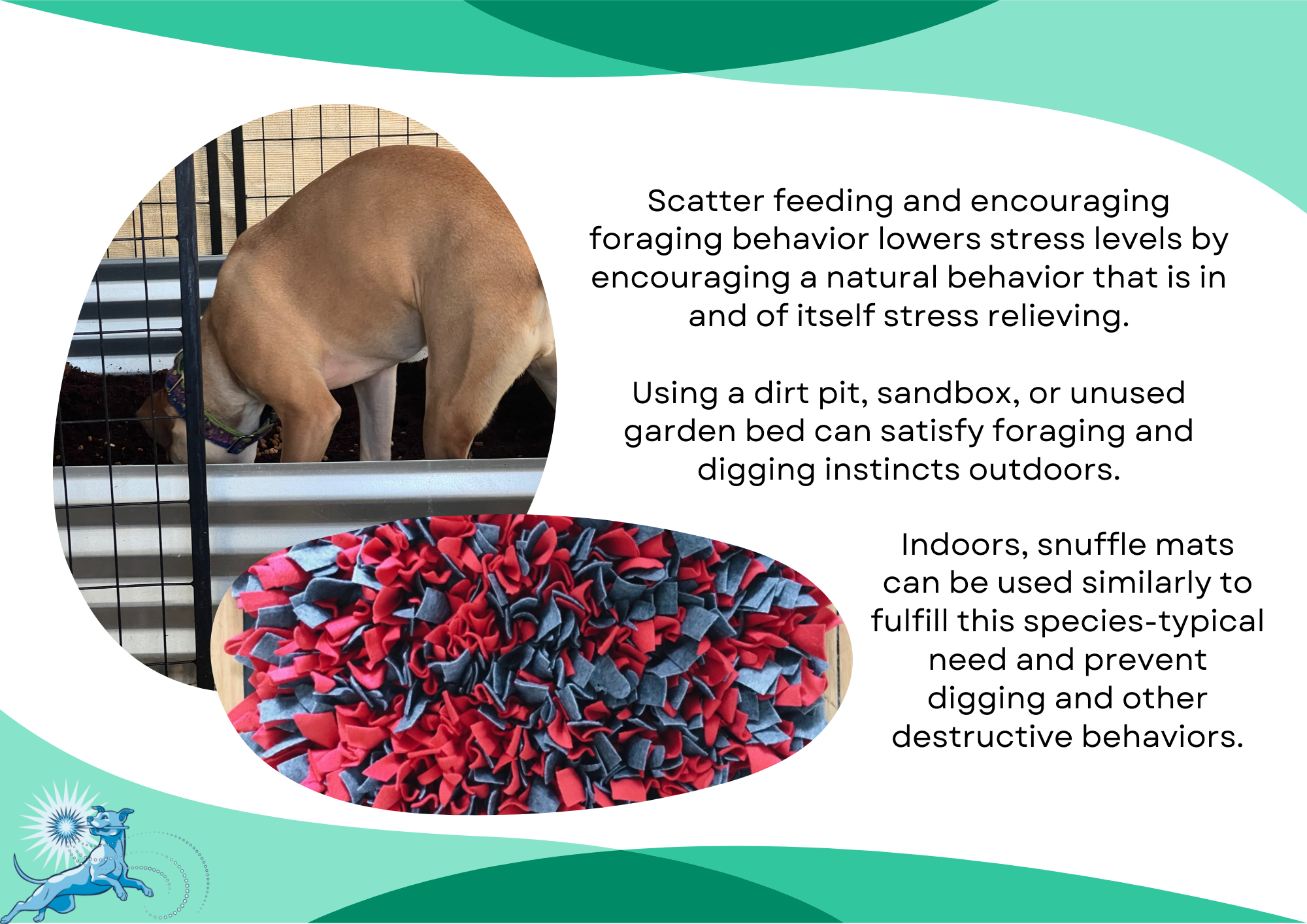
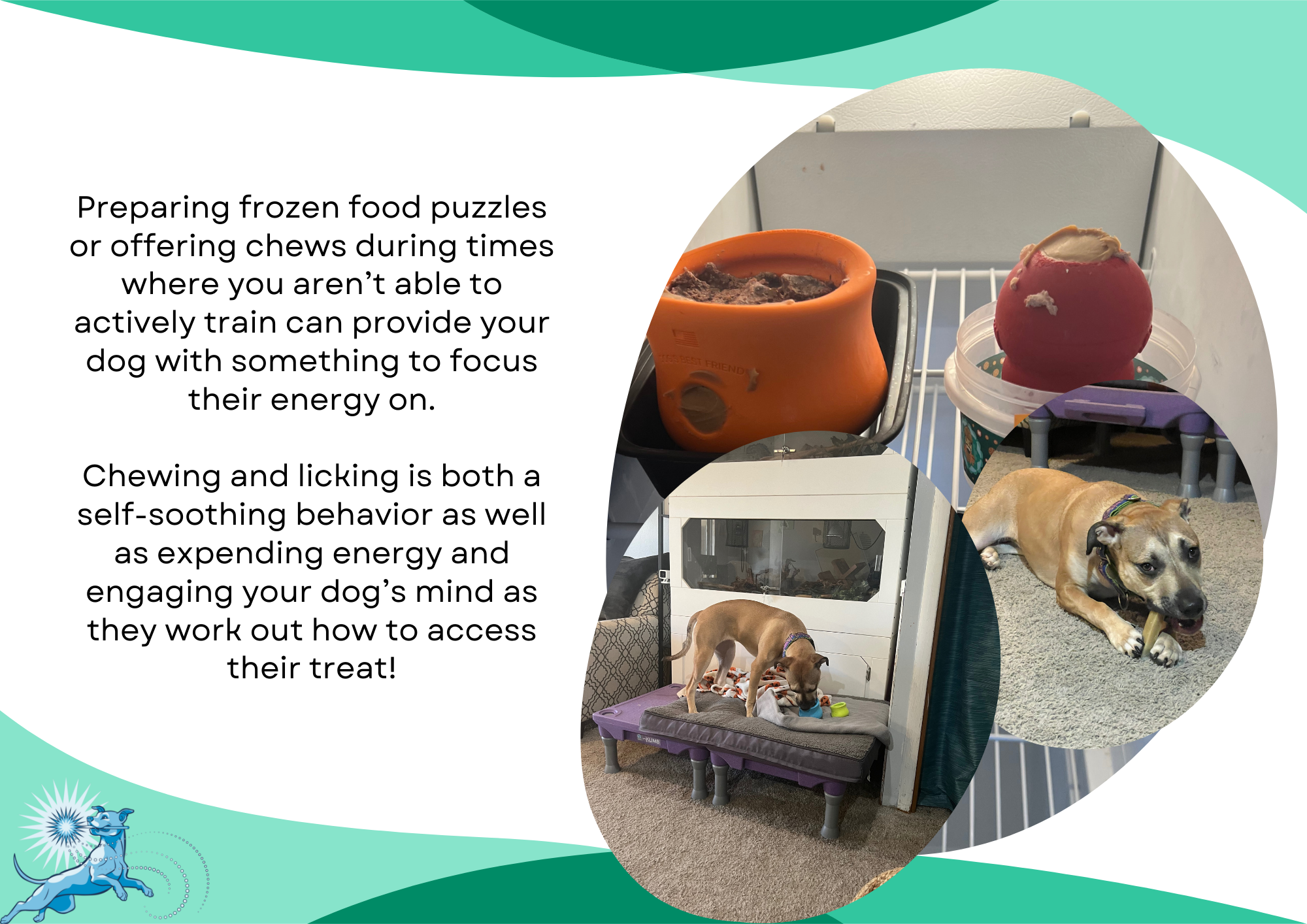
Look at “learning to relax” to continue to build Blue’s relaxation and emphasize that when others are over. Set him up with a frozen toppl or other food toy to get him licking and soothing himself.
Sensitivities:
Sound sensitivities can be challenging to work on since they are somewhat unpredictable. However, teaching Blue to make his own noise and anticipate positive rewards can be a great way to desensitize him to unexpected sounds. You can also similarly play sounds on the TV (search for specific sounds on youtube) and ask him for “look at that” when you can predict the sound about the occur.
For spaces where he needs time to acclimate, give him time to offer attention using some of the initial pattern games he learned- the more he practices this the more confidence he will have in new spaces. Specifically at Pinkies and the vet, aim to plan some happy visits where there isn’t any pressure to get anywhere and you can work on his comfort willingly moving into the building, and maybe getting treats from the techs or hopping up on the scale. Let me know how this is going - we can always do a follow up session at a vet office!
Kids and Dogs!
It sounds like overall things are going more smoothly with the kids and Blue, but that there are still some instances where Blue feels crowded and isn’t responding appropriately. While Blue’s behavior isn’t ideal, those responses will typically lessen as more trust is built between the kids and Blue. After a bad moment, I would move Blue to his crate or bed where he can expect to be left alone. The boys can decorate his “Zen Den” to help make it pretty and keep them involved.
Proactively, have the kids practice how to invite Blue to play with them - as well as involving them in training, which Blue will likely enjoy over pets (at least while he’s still so young!) - they can absolutely help with making noise for the noise sensitivity training, as well as some of the games he and Cassidy played while he stayed here.
Help them remember to:
Pat: Pat their leg to invite Blue over to them, rather than approaching him directly. This gives Blue the option to interact or to walk away, rather than feeling potentially crowded or overwhelmed about them coming in to his space.
Pet: Pet Blue with one hand, collar to tail. Using one hand only ensures that Blue always has the option to move away.
Pause: After a few pets, remove your hand and take a break to give Blue a chance to decide if he wants to ask for more pets, or to walk away and do something else. These sort of consent checks are really helpful for all dogs who might otherwise be sensitive to handling. See if they can count the consent checks in the video attached!
02/02/2025
“Get Your Toy!” as a cue
As a way to continue to give Blue an outlet for his mouth when he gets excited, I would recommend formalizing a cue for him to get a toy and keep hold of it in his mouth - for Fig, that cue has become “Get your toy” or the even more informal “Go put something in your mouth” - Fig is pretty motivated to do both of those things, so it’s actually something that with consistency of use became a cue naturally over time, but you can help this along by pairing the cue with initiating a game of tug or throwing a ball or other toy. This can be especially helpful when he get amped up about the kids playing!
“Middle” Station
I love when tricks come in handy for meaningful behaviors! I like teaching my dogs to “middle” as an easy stationing behavior while out and about to signal both to them - and to the general public - that your dog is not available for interaction. This can also help stabilize and excitable dog like Blue with a visual barrier/stationing spot that you quite literally bring with you everywhere you go.
Start by rewarding your dog for moving behind your back, progressing with the treat until they are comfortably moving directly behind you. Once they’re continually doing that, you can add a treat tossed between your legs, or lured through your legs. You can also use your hand target behavior, as demonstrated in this older video (of many tricks you can use a hand target for teaching!)
Greetings Protocol - Current and Over Time
For the time being, Blue needs a lot of guidance and help to expend some excited - but also some conflicted - energy for greeting houseguests. I would absolutely recommend him dragging a leash through this process - if it’s possible not to hold it, or not to let it get taut I think that is the ideal so he doesn’t amp up further but dragging the leash gives you something to hold on to if he does get too excited.
As guests come in, right now you want to plan to release Blue as soon as the door opens, ideally to a treat scatter by his bed, and then going into a staggered approach down the hallway. You can also scatter at the guests feet as need be. Use those treat tosses to move the group further indoors to where you typically spend some time socializing in the kitchen/living room space and until Blue can offer a sit for greeting with the new person.
Over time, you’ll lengthen his time spent on his place and reduce the need first for treat scatters and then ideally for the staggered approach, so he can be released from his place to come over and sit for greeting. Make sure you are gauging his success at each of these stages though, and not progressing until he’s ready. Jumping, barking, and nipping can all be significantly reinforcing behaviors for Blue, so it’s all the more important that he has limited chances to practice those undesirable behaviors as he’s learning better ones!
Next Steps
Blue is definitely a dog who will benefit from continued training and maintenance, and a lot of outlets for his energy. I would love to see him more as you guys continue to work with him, and have some classes and services I might particularly recommend:
Consistent regular training: Training Montage Subscription - this might be a more achievable set up for continuing regular work with Blue. This monthly subscription entitles you to up to four weeks of video submissions and live coaching sessions each month - with follow up recaps and resources here on his webpage. The coaching sessions are virtual and just 20 minutes so a little easier to fit into the day, and serve to follow up on or troubleshoot the video feedback given on training and behavior videos you can send over the course of the week. Weekly you’re entitled to:
Up to 3 videos under two minutes long submitted weekly for pre-session review and 1 additional homework video after session
Weekly 20-minute live virtual coaching sessions to discuss training for the week and provide coaching and troubleshooting
You’re also always welcome to sign up for brush-up or maintenance sessions one-off on the scheduler here!
Enrichment Drop In Classes: These weekend classes have been a little on the back burner, but my goal is to spend more time developing and emphasizing them as the weather gets warmer. All the classes will be reactive-dog friendly and have only one dog working at a time, but essentially they’ll be able to come out to the park and focus on a specific aspect of enrichment and a game to play that serves to fulfill that need. Those classes are listed here for registration!
Reactivity Practice: These classes don’t pick up until Spring, but currently I am on track for starting back with Reactivity Practice classes in April - these classes are specifically for dogs who have gone through a Reactivity Foundations class, or have worked with me on those behaviors and need safe set ups to progress and practice. I would definitely encourage Blue to join these as I think that approach to group learning will be more successful for him than an average manners class (which I suspect he might find overstimulating). I don’t have exact registration details yet as I’m looking to partner with Animal Welfare Society of Howard County to host those classes, but will be sharing details about it soon!
I also wanted to recommend the Fenzi Dog Sports Academy as a great way to dabble in a variety of dog sports, all with positive reinforcement. I think he might especially benefit from the next session of Pay to Play: Using Food to Get Great Toy Play run by Sara Brueske (next available for the April-May semester so registration opens March 22). I would highly recommend any of Sara’s classes that resonate - she’s a great trainer with some really excellent instructions and activities, but also just really well organized and well-run classes.