
Thea
The Adventure Begins: 01/13/2025
What is the Humane Hierarchy?
Addressing behavior from a professional lens means approaching change from a systematic and humane process. While you can read a little about my training philosophy on my Frequently Asked Questions and in this blog post, generally speaking when looking at behavior change I will recommend you review the Human Hierarchy of needs for your dog.
This structure emphasizes physical and mental welfare, and changing behavior by setting up successful interactions with positive reinforcement driving preferred behaviors. I am always cautious before including any behavior in a training plan that may exacerbate frustration or distress for your dog, and will work to avoid creating fallout and mistrust in your training program.
Coaching Resources
Start Here
〰️
Start Here 〰️
The Handbook is a lengthy read, but has just about everything you might need to know when starting a program. This is the absolute best place to start with your training package.
Start Here
〰️
Start Here 〰️
Guild Hall is a client portal within my website - you’ll find classes and events available only to past and present clients there, as well as discounts on certain future services. You’ll also find recommended outlets for your dog, including sports, events, and sniffspot information.
Your google drive is available to you to reference your contract and contact and care form, make updates to your dog’s care information, upload vaccination records, as well as share videos and photos with questions or for feedback!
Character Sheet
Thea
Session Zero: 01/13/2025
Recommended Training Package: Virtual Coaching for Behavioral Challenges

Space Guarding: Thea guards the couch from cats and other people outside of her owners. Currently Thea is generally not allowed on the couch and the couch is gated off to separate Thea from the area. Management has worked well thus far but isn’t an ideal sustainable situation long term.
People Coming Over: Thea becomes very anxious when people come over and can sprain her own tail in her overaroused state. Ideally Thea will build skill to allow her to experience guests coming over without barking and jumping but instead building relaxation.
For these behaviors, relying on place or having Thea on leash has not been successful in the past.
General Confidence Building: In general Thea has improved dramatically with the tools already at her disposal and the medication already on board. While her outdoor behaviors have much improved, the goal is now to build her confidence in the home, especially in anticipation of other life changes!

Thea already has a lot of enrichment and wellness practices in place - what I would emphasize moving into work on her indoor behaviors is continuing to find opportunities for her to decompress, especially time in the house away from the cats. That might mean play or “fun” training with her people, or just a snuffle mat all to herself each day. I want to keep in mind for her that some of her stressors exist in her living space with her (and similarly, one of your cat’s stressors live with them!) and giving them time apart can be beneficial to their well being.

There’s so much for management that you are already doing that’s fantastic for Thea. I would stress ensuring that she doesn’t have the opportunity to guard space from the cats throughout the day - either by separating her or the cats from the space - and building up her crate skills will come in handy as she works through these pieces of her behavior challenges.

Additional Recommendations:
As mentioned in the management section, I would recommend building comfort in a crate outside of other stressors. We can add this to Thea’s training plan or it can be something worked on outside of formal sessions!
01/13/2025
Using the remote feeder, you can reward Thea intermittently by settling while the cats are present, or even looking towards the couch while the cats are nearby without a reaction. Start with simply rewarding her during normal life as you are currently managing the situation, then invite increased activity from the cats to reinforce more difficult situations for Thea. Keep sessions short and engaging - both to keep Thea engaged in training but also because this is likely to be a stressful activity for both Thea and the cats.
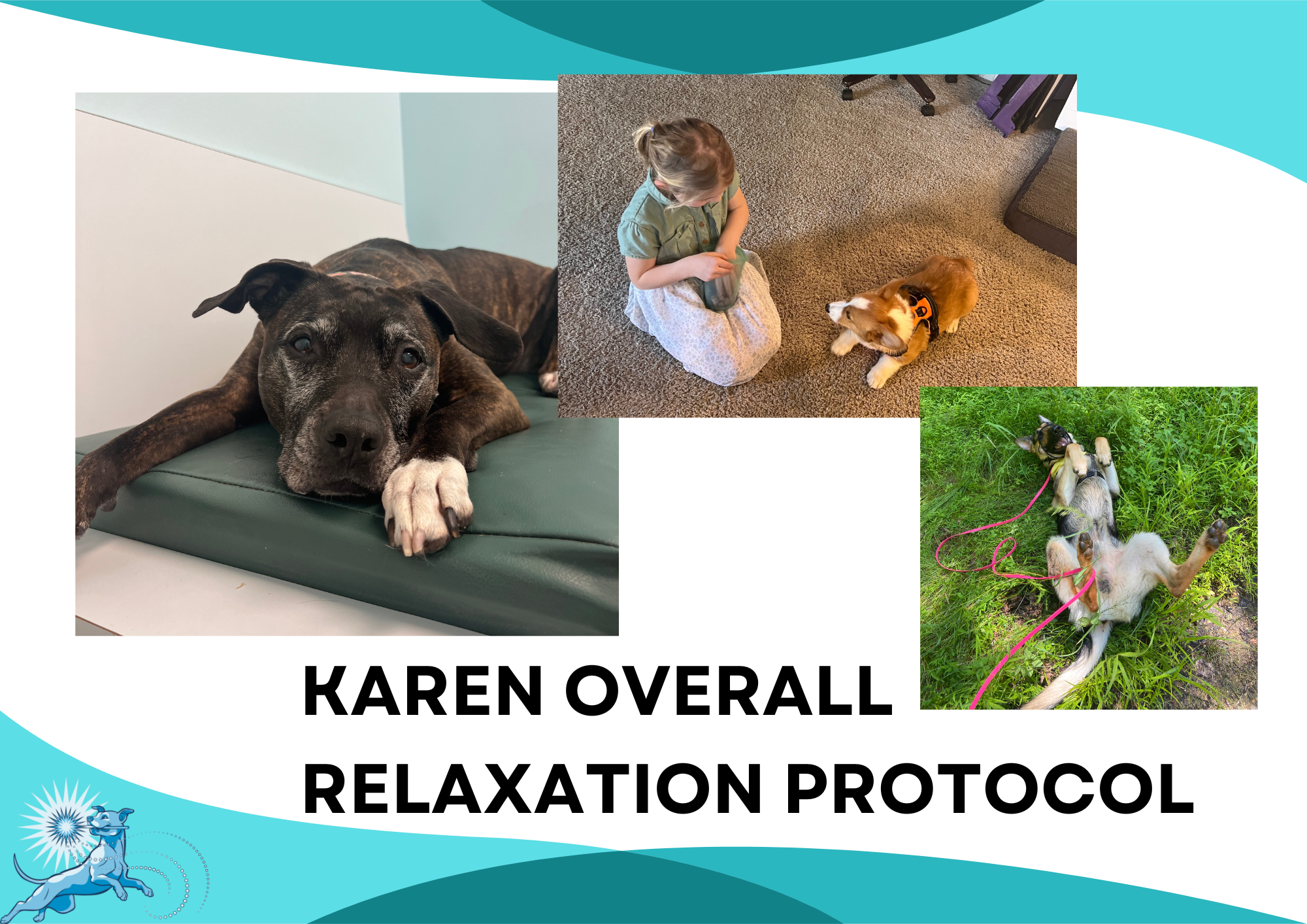
I would also recommend using a structured relaxation protocol like Dr. Karen Overall’s to build an expectation of neutrality in spaces where Thea and the cats share space. I don’t typically find that the Overall protocol is a great one for genuine relaxation and can give you more tools to build settling, but what it can do very well is reward animals for being neutral or even bored sharing the same space. You can ask Thea to do this protocol on her own, or have your other animals doing the same behavior alongside her (Churu often gets the cats on board!) If the 8-10 minutes is too long to ask Thea for the same behavior, split the day’s protocol up over two sessions or even two days. While there’s a longer description of the protocol below, use the link included for a youtube playlist reading the protocol aloud for you to follow along!
Thea has a lot of behaviors already under her belt, and as a team you already have the relationship and skillset to make a lot of progress outside of formal sessions. This, combined with Thea’s shorter attention span for training, leads me to recommend my virtual coaching program. The program is set up as a monthly subscription with weekly video submissions, review, and short virtual sessions. Especially for the people in the home part, I would likely recommend supplementing with 1-2 private sessions that you could then continue with feedback on practice sessions with friends or neighbors. This approach would also keep us in touch more regularly so we can troubleshoot and change course as needed to keep Thea progressing and adjusting as her life changes.
The virtual coaching program is charged monthly and includes 4 Weeks of video submissions and live coaching sessions:
Up to 3 videos under two minutes long submitted weekly for pre-session review and 1 additional homework video after session
Weekly 20-minute live virtual coaching sessions to discuss training for the week and provide coaching and troubleshooting
Recaps and Resources provided on your personalized webpage (here!) to keep you on track between sessions
Lifetime Access to Drama Class Online self-led class
Everything that the client portal Guild Hall has to offer - including nearby classes and events, discounted services, additional troubleshooting and coaching, and more!
Monthly Subscription…$150
Let me know your thoughts about this approach - if you’d like to get started, you can purchase the subscription here and start signing up for session times here!
Skill Tree

03/10/2025
Training Montage
03/12: Notes
If meds wear off for Thea near the end of the day (or trigger stacking/fatigue is just higher) aim for sessions near beginning of the day and set up decompression time for her closer to evening. That might be in her crate, in a room separate from the cats, or otherwise.
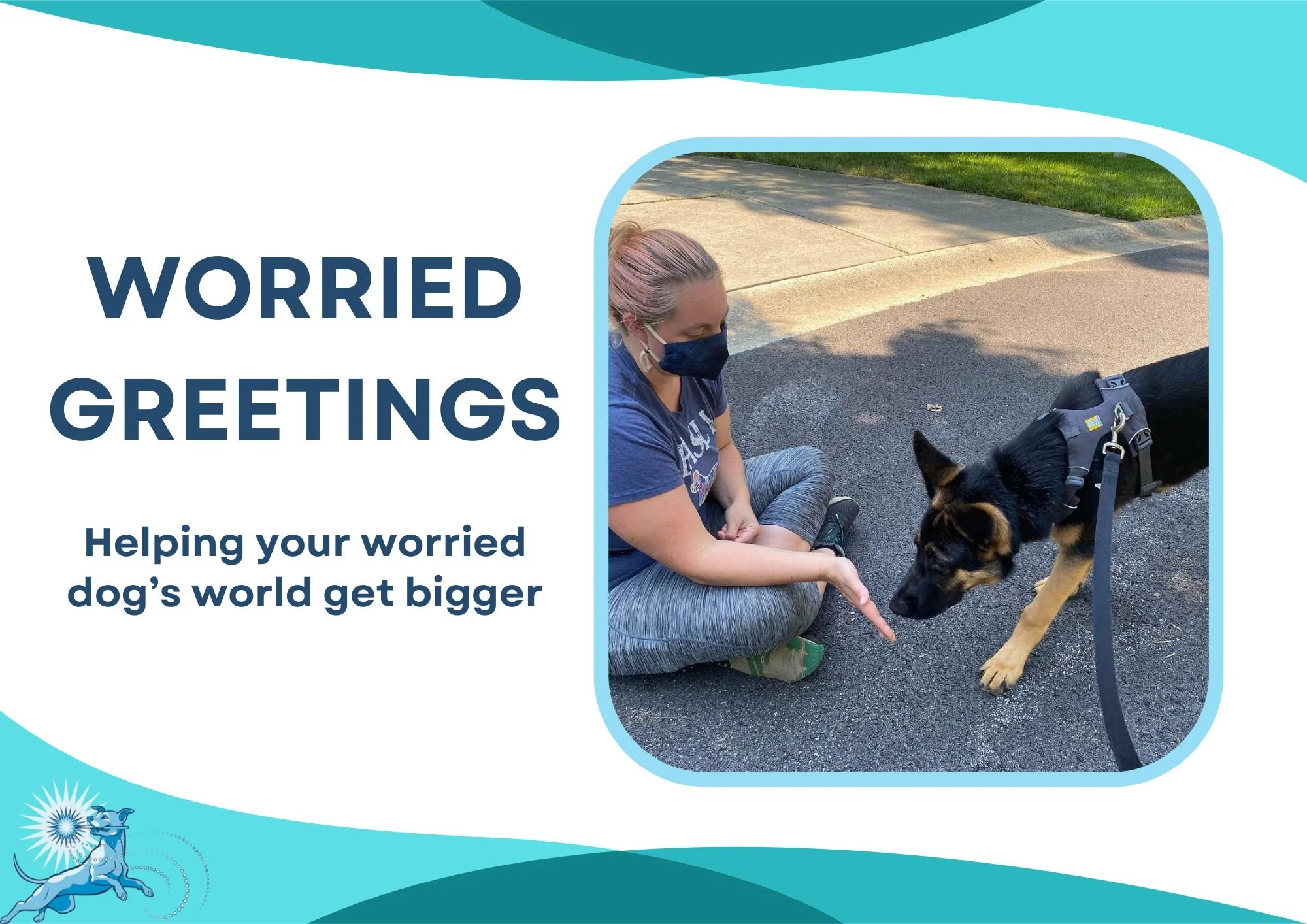
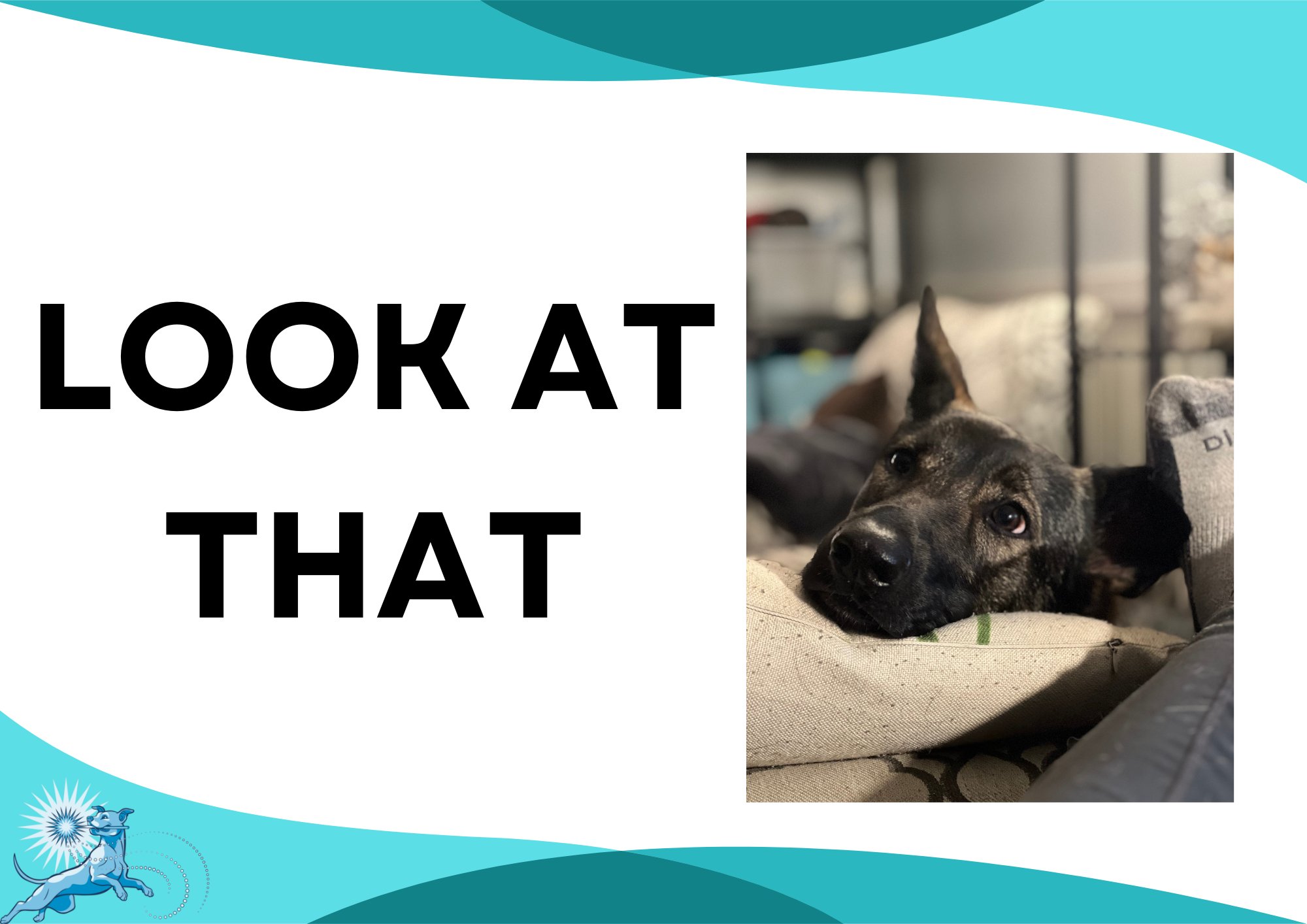
For Look At That - criteria can shift depending on how difficult the exercise is. If she’s struggling or “sticky” in her responses, click for her “noting” the distraction. Otherwise, wait for her to turn back to you and click for noting and “reporting” it back to you.
Let me know how crating goes when you go out re: separation distress!
Start moving the gate down when working Overall relaxation - but only if the cats aren’t also a factor. We can start to normalize a calm down behavior near the couch without the potential for conflict with the kitties!
03/24: Reviewing Look at That as a cue:
I think that in general, if it works as an attention behavior, it’s not a bad thing to do, but it’s not quite in line with the exercise as we’re talking about it.
In that situation, you could do two different things to use “Look at that” in this context:
Even though she’s already barking which isn’t the ideal but is something you can build on you could mark “yes” or click (for an “offered” look at that), and reward her when she looks in response to the click or even use the treat after the click to lure her back to looking at you.
You could start with another behavior to grab her attention first like a “ready?” or her name if that works better since it sounds like she was in a place where she could respond to cues, click and reward for that attention, then go into “cued” look at that
The next step after both of those scenarios if this was a place you wanted to work the behavior more, would be while she’s eating and looking at you, cue again “what’s that?” and when she turns to look back out, click and reward back towards yourself.
Let me know if that makes sense!
This behavior can always get confusing because it’s intended to be flexible, so I also posted a video to my social media that I meant to send you – you can view it in Thea’s Drive Folder or via this link here. The captions on the post were:
When to Stop and When to Stare?
A question I get often when learning “look at that” is when to reward.
Look at That is already a tough behavior for pet owners to work on. We’re told from Day 1 to reward our puppy for engaging with us, and now, suddenly, we’re rewarding them for...looking away?
And then I introduce the idea that my criteria for Look at That is often fluid - depending on the situation, I might mark and reward a dog when they are looking out at the distraction/trigger, or I might wait for the “complete” behavior - and wait for them to look back at me.
When you’re choosing how and when to reward your dog with this, consider:
❓How long has the dog been working off of these distractions?
❓How does the dog feel about the distraction?
❓How new is the dog to not only this behavior, but this environment? This particular distraction?
❓How likely is the dog to react and how likely are they to recover?
❓Is the distraction likely to become more difficult to work off of, easier, or stay the same?
❓What is the potential fallout of a reaction right now?
Take our current board and train, Misa, in these two videos. In the first one, I stop her and reward early, marking and treating her while she's still looking out.
1. She has been working for a while off of dogs - she already worked off of Hunter before this.
2. She's in a new environment at a park we haven't been to before.
3. Little dogs historically are particularly challenging for her.
4. Riz is still growing, and is unpredictable - he's unlikely to do something to make the challenge harder, but he could!
5. If Misa were to react, I risk influencing Riz's willingness to work off of her (and other dogs) in the future.
Whereas, in the second clip, we're somewhere more familiar, she's coming into the training session fresh, and Louis the stuffed Frenchie is both unlikely to do anything unpredictable and unlikely to be impacted emotionally by her reaction. In that situation, I judged it safe to wait for her to "complete" the behavior.
04/02
🧘♀️ Structured Relaxation with the Cats
We’re continuing to build on Thea’s relaxation skills around the cats by adjusting the “levers” of difficulty thoughtfully. The key here is to only shift one variable at a time—
folding back one segment of the gate before bringing the cats in
adding the cats into the space and essentially having them do a version of a relaxation protocol alongside her
extending the duration of relaxation—rewarding her intermittently after the protocol officially ends
Long term, it might be worth installing tether points in areas where you usually want her to relax (like the dining room , living room, or her usual hangout spots). This can give you an added layer of management—especially once the babies arrive.
🛋️ Guests & Resource Guarding
Since we’re still working through Thea’s guarding around the couch and progressing her comfort with the cats, I recommend continuing your current setup—spending time in the dining room when guests arrive.
If you know when guests are coming, definitely use her event medication to help her start from a calmer baseline.
This weekend, practice some relaxation ahead of time, and have her on her mat/place as your parents walk in. Reward generously for any calm behavior.
If she wants to greet them, that’s totally fine—just make sure she returns to her mat afterward. Have her on leash (or with a drag leash) so you can guide her gently if needed. When your parents begin moving toward the couch (which is typically when she gets tense), give her a big treat scatter or trigger her remote feeder—ideally prompting her to move away in the opposite direction. This gives her an alternative behavior and supports her choosing space.
Let me know how things go this weekend! From there, we can start layering in more baby-prep work as we go.
This is a video of my recent board and train, Tom, doing some relaxation protocol (a less structured version) alongside the cats. Obviously with Thea we’re working at a greater distance and with some barriers/safety measures at first, but this is an ideal picture: everyone calm and neutral towards one another and sharing space as they practice.
04/23
It was so great catching up during our virtual session, and I’m thrilled to hear that the recent events at home went smoothly—yay for Thea!
As we begin preparing for baby-related changes in the household, here are the areas we’re focusing on to ensure a smooth transition for everyone:
Key Exposure Areas:
“Fake baby” scenarios: Practice carrying and speaking to a doll or Odie in a sling while rewarding Thea for staying calm and not jumping up to investigate.
Feeding practice: Simulate feeding in different household locations (dining room, nursery, especially the dreaded couch) while reinforcing calm behavior.
Location planning: Decide ahead of time where Thea should be during key baby routines to remove uncertainty.
Sound desensitization: Expose Thea to baby cries, toys, white noise, heartbeat stuffies, and mobile music.
Object desensitization: Introduce items that roll, swing, or move oddly.
Homecoming Guidance: Rather than viewing baby’s homecoming as a one-time event, treat it as a gradual integration process. Thea’s involvement can grow over time, reducing overwhelm for everyone.
Thea is likely to be ecstatic when you return, especially if the experience has felt, to her, like a vacation-style absence. Let her reconnect with you first before introducing the babies. Same greeting protocol applies—gabapentin, place cue, leash—followed by a calm sit at the table with baby feet sniff access only. This sets a respectful, manageable precedent from day one.
Let me know how things go as you implement these, and I’m always here for support!
05/25
Thanks again for sending over that video—such great work with Thea!
It was really encouraging to see how she’s handling couch time, especially with the activity and movement from the cats. I agree that leaning on the Overall Protocol makes sense here, and I love that you’re already thinking in that direction. For your specific needs, I’d suggest tailoring it a bit to focus on relaxation behaviors on the couch, using structured but flexible intervals and activities.
Here’s an example progression (inspired by Day 1 of the protocol) you might use as a template:
Rest for 5 seconds
Rest for 10 seconds
Rest while you shift forward on the couch
Rest while you shift forward and back
Rest for 10 seconds
Rest while you pet Ody briefly
Rest for 10 seconds
Rest while you brush Ody (especially if he moves)
Rest for 15 seconds
Rest while you softly baby talk to Ody
...and so on.
The idea is to break down these moments into manageable pieces, using the protocol’s duration + distraction format, and align it with real-life activities involving the cats.
Also, no need to hold her to a strict down-stay—her ability to get up, grab a treat, and resettle was great to see, and I’d love for you to keep giving her that freedom to move her body before returning to calm.
One important consideration going forward is reinforcement placement. Since treats are currently coming from the couch, she’s very tuned into that space. She’s doing a nice job disengaging already, so I recommend using the remote feeder or having dad deliver rewards from across the room. This will help reinforce her ability to settle away from the couch and encourage a bit more distance from the “guarded” zone.
As she becomes more comfortable, I’d love for you to begin incorporating small “baby tasks” with Ody, if he’s comfortable with it. These can mimic the kinds of movements and sounds she might experience when the twins arrive—standing up and swaying, cradling him, “burping,” or laying him down for a pretend diaper change. Not only is this great cat-related desensitization, it’s also ideal prep for the babies being active on that side of the room.
Let me know if it would be helpful for me to write out a more detailed Ody & Jasmine-specific relaxation protocol—I’m happy to put something together!